Monday, June 23, 2008

Watch Nova Science Now June 25th

Check out the summer schedule for Nova Science Now here.

The June 25 broadcast will talk about dark matter and cute mice with Alzheimer's.

You can watch these segments online as well.

This show is hosted by one of my favorite scientists, Dr. Neil deGrasse Tyson. Hope you all enjoy it!

Sunday, June 22, 2008

A Slow Decline of Faith

So I left off my story telling about how I couldn't stand being told what to think. But that didn't end my faith or belief in God. I may have bought into the evangelical movement like it was an impulse purchase at the supermarket but I still believed in God. I just didn't want to have anything to do with organized religion.

The years following were busy with college so I didn't have much time to think deeply about God. It wasn't until I was out of college and working for a living that God came back into my life. I've spent many hours thinking that perhaps I was abandoned by God because I had abandoned him. But anyone with a child will understand that to abandon your child is not something that you can do easily. I'm not sure what my son would have to do for me to turn my back on him. So if God, the Father, really did abandon me because I turned away from him because I had so much going on my life then he must be easily offended.

God did come up a bit during college. I was living with my fiance who would describe herself as spiritual but not religious. I remember being uncomfortable with Taoist usage of the term God (I understand now that Taoism seems to be pantheistic) , it made me feel like I was worshiping some other God. I don't remember praying but I imagine I did. I was never one to pray for good grades or a better job but later on I did pray for a healthy child.

The first big hit my faith took was when my now ex-wife miscarried. I didn't understand at the time that many pregnancies end in miscarriage. I guess I had a very ignorant view of pregnancy even though I had taken multiple biology classes. This event had a huge impact on my psyche. For two months I had fantasized about what it would be like to have a child. I had already gone out and bought a cute outfit that could be worn by either a boy or a girl. My wife had even nicknamed her/him. But then she started bleeding. After calling her ob/gyn we went to the hospital. I remember when they admitted us they asked what our religion was. I'm not sure if this is normal for all hospitals but considering this hospital was named after a saint I figured it was normal for them. We had a hard time answering the question. It seems they didn't like "just Christian." I honestly can't remember if I prayed during all of this. Praying for me was never a public event. It was always something I did internally. But the end result was there was no baby.

But I prayed more during the second pregnancy so I thought that I was on the right track. It didn't occur to me to look at how many atheists had miscarriages. I was raised to have faith and that is what I did. The end result this time was a very healthy boy!

The next chink in my faith armor was when my wife told me she wanted a divorce. For me at the time this came from out of nowhere. I had lived with this woman since I was 19. Now I was 30 and I was on my own. Fortunately, it turned out to be an "amicable" divorce. I got equal custody of my son and that's all I needed.

For the first time in my life I was living on my own. And for the first time in my life I realized that when I prayed there was nobody listening. I looked for wisdom but not in Christianity. I don't recall actively rejecting God, there was no moment where I looked in the mirror and said "I don't believe in God." like Ayaan Hirsi Ali had. I remember browsing Borders for books and coming across a books of quotes by the Dalai Lama. I picked it up and liked what I read. I bought another book. I found logic in some of the Buddhist philosophy. But I didn't read past explanations of reincarnation. Something inside me had clicked. Something inside me rejected anything supernatural.

Being on my own and having only a 3-year old to talk to was cathartic. It also gave me a lot of time to think about life and what it was all about. When you become a parent something inside you changes. I don't know if there is evidence of some parent gene activating but you become focused on making sure your child survives. I thought hard about how I was raised and what I thought was done right and what was done wrong and tried to make sure I raised him accordingly.

But at no time during all of this did I look up to God and ask for help. I realized that I must be in control of my life where I was able to control it and to live with the fact that sometime things happen and there is always an explanation for them.

It wasn't until last Christmas that I decided to take another look at my faith and come to the final conclusion that no, there is no God. But that I will save for later...

Wednesday, June 18, 2008

Audiobook Review: The Dream of Reason

The Dream of Reason: A History of Philosophy from the Greeks to the Renaissance by Anthony Gottlieb

I've always had a love for philosophy. I enjoy discussing topics like ethics and I enjoy discussing science just as much. But I didn't know much of philosophers outside Plato, Aristotle, and Socrates, who's name I always pronounce in my head like Bill and Ted did, thanks dudes!!!

The Dream of Reason served as a primer for western philosophy up to the Renaissance. Much time is spent on early philosophers and their main ideas as these served as the foundation for most of their successors.

As audiobooks go, this one was hard to digest. This was definitely a book for reading, not listening. There were just too many names to consume while sitting in traffic. I found myself having to listen to sections twice, more because an idea would be discussed and my mind would start to ponder it and a few minutes later I would realize I had no idea what had been discussed after that.

Anyone looking to get a broad understanding of western philosophy should pick up this book, though I suggest you get the paper version so you can ponder all those wonderful ideas! If you must get the audiobook be prepared to pause and repeat sections.

The Dream of Reason gave me some great starting points for further study. I enjoyed learning about the Pythagoreans (the math geek in me) as well as Stoicism, Skepticism, and Epicureanism. I wish it had delved more into the later philosophers, though. All the same, I enjoyed the book...

Tuesday, June 17, 2008

The Atheist Thirteen

Looks like I got tagged to answer for my crimes of doubt! Oh nooes!

Q1. How would you define “atheism”?

Being just as sure there is no God as a fundamentalist is sure that there is. I am somewhere in between.

Q2. Was your upbringing religious? If so, what tradition?

Not very. Episcopal.

Q3. How would you describe “Intelligent Design”, using only one word?

Irrelevant.

Q4. What scientific endeavor really excites you?

I'm a guy, and guys like smashing things, so I'm looking forward to the LHC starting up and sucking us all into a black hole!

Q5. If you could change one thing about the “atheist community”, what would it be and why?

I didn't think they were a community. But some of them obviously missed out on burning their bras in the 70's and are looking for a way to vent! Ha! Take that PZ! ;-P

Q6. If your child came up to you and said “I’m joining the clergy”, what would be your first response?

Be sure to ask lots of questions. They love it when you ask lots of questions. You'll be a star pupil in seminary school!

Q7. What’s your favorite theistic argument, and how do you usually refute it?

We should base our laws on the bible! To that I ask if they REALLY want to kill their children for being smart asses or if they REALLY want rape victims to marry their rapist or if they REALLY want to kill their relatives for not believing or if they REALLY think slavery should be legal.

Q8. What’s your most “controversial” (as far as general attitudes amongst other atheists goes) viewpoint?

For all we know it's the atheists who are the crazy ones with defective genes or something!

Q9. Of the “Four Horsemen” (Dawkins, Dennett, Hitchens and Harris) who is your favourite, and why?

Probably Hitchens, though at first I couldn't stand the guy. I still don't like his political views but I think he's the best writer of the bunch and he'd probably be a hoot to have some beers with.

Q10. If you could convince just one theistic person to abandon their beliefs, who would it be?

The Dalai Lama. Yeah, yeah, Buddhism is a philosophy but the Tibetans based their country and culture on the idea that this guy is the reincarnation of reincarnated Buddhist Masters. I just want him to admit that reincarnation is baloney and he 's just a normal person raised to believe all that crap.

Now name three other atheist blogs that you’d like to see take up the Atheist Thirteen gauntlet:


I think they all have done it already...I will let this one die here...

Tuesday, June 10, 2008

Apologize for What?

I recently learned that there were people called "apologists." These are defenders of the Christian faith. My first reaction after hearing the term was "what are they apologizing for?" Yes, I know that the root term is meant to call them defenders but I just found the term to be a sad excuse for the shortcomings of a perfect text.

Why does the word of God need defending? Why are the inspired words of God not enough by themselves?

In my opinion, the word of God should transcend time. By this I mean that no matter how old the words they should hold strong against changes in culture and, most importantly, discoveries of science.

If we were indeed made in God's image then that should remain constant in us throughout the ages. The words written directly by him or inspired directly by him should hold the same meaning today as they did they day they were written. That connection we have to him should allow that message to pass easily into our conscience and we should understand it unambiguously as soon as we read it. When we read the bible we want to make a connection with God. We either want insight into his plan or assurance of his existence. But it seems EVERY bible of EVERY religion is written with the limitations of the writer's imagination. How many times have you read a great novel and been so sucked in by it that you felt you were there and you were experiencing the love, the hate, the passion, the envy that the author was trying to convey? Do you get that when you read your bible? Or are you just confused?

If you had never read the Christian bible before in your life and you had never heard of Christianity and you picked it up and read it would you immediately believe in God? Would God speak to you through those words or would you just be reading a translation of a translation of stories that were passed by word of mouth and modified here and there throughout the ages?

Is that what they apologize for? Because they were born and raised with all those words drilled into their head and told to be the word of God but there exist people who just don't get it? There exist people who don't understand what all the fuss is about over a God who is loving and angry and jealous. A God who gave us these wonderful brains but asks his followers to strike down those who doubt him? A God who was perfectly fine with slavery, even when he was in his kind and gentle form of Jesus?

Did people 2500+ years ago not have any sense of logic? Was Aristotle REALLY the only one who figured out logic? If there existed a tree of knowledge of good and evil one would assume that Adam an Eve had no knowledge of good and evil. And here it is and God says don't you eat from it but he puts a serpent in there with them who tells them to go ahead and do it how were they supposed to know that it was bad for them to disobey God if they had no knowledge of good and evil at first? If this was meant to be taken literally then I have to call a foul on God for being the one who tricked us. But if it is meant to be a metaphor then I have to say that was some bad writing because when you break it down it doesn't make sense.

Is that what they apologize for? If I had never read the bible before and I picked it up and started reading from page 1 I would stop after that part because if the first story is a logical fallacy then the rest of the story cannot follow. One cannot take an entire book that is the word of God and pull out the parts that are logical fallacies. Government checks used to say "DO NOT BEND, FOLD, OR MUTILATE" well I would say that you MUST take the bible as a whole, no bending, folding, or mutilating. And if the words of God are logical fallacies then I have to assume that the God who inspired that book must not exist. This one story is part of the foundation of three religions. When you pull out that foundation then all three must fall.

Since God does not walk among us and make himself known to us then all we have is his word. His word should need no apology. His word should need no defense. But here we are, apologizing and defending. Ignoring the evolution debates and the big bang theory for now, we are a logical creature. At an early age we somehow know what things make sense and when they don't. If A==B and B==C then A==C. Aristotle figured that out over 2000 years ago...so why didn't God?

Saturday, June 7, 2008

Book Review: Galileo's Daughter

As embarrassed as I am to admit it, my knowledge of Galileo's life before reading Galileo's Daughter could be written in a few sentences. I knew he was a great scientist. I knew he did something with telescopes and was an astronomer. But that was about it. I knew he lived part of his life under house arrest but I couldn't tell you why.

But after reading Dava Sobel's biography of Galileo Galilei called "Galileo's Daughter" I feel I have followed his life the way we follow that of some insightful blogger. To put it that way seems to cheapen the experience, because in today's world we don't have eloquent hand written letters like the one's presented in this book. Sometimes when you follow the writings of bloggers you wonder why you must endure painful discourses on their most mundane happenings. In the case of Galileo's Daughter you welcome those trivial details as it casts a vision of the great philosopher that you don't get in a dry science textbook.

I picked up Ms. Sobel's book a few weeks ago while perusing the science section of Borders. I wanted something scientific but also something lighthearted. Upon seeing another book by the author of Longitude I snatched it up and quickly drove home to read it. If you haven't read Longitude or seen A&E's movie, I suggest you stop here and pick up either. You won't be disappointed. I saw the movie first then read the book later and Dava Sobel does an excellent job of turning a biographical story into a page-turning journey without sacrificing historical accuracy.

Galileo's Daughter continues the precedent set by Longitude and places the biography of Galileo against the backdrop of letters written to him by his daughter, Virginia, who adopted the name Maria Celeste when she became a nun. Only the letters from her survive as the letters from him were destroyed after her death. But Sobel gleans much from letters sent by the scientist to his peers.

Applying the morals of a 2008 humanist to the life of Maria Celeste I found myself angered to see her locked inside a convent. Of his three children she seemed the most adept at understanding his thoughts and his theories but she was limited by the norms of society in the 1600's. If you weren't married by age 16 then you became a nun and being an illegitimate daughter she couldn't be married. But this did not stop her from becoming literate in Italian and Latin.

I became so entranced by Sobel's account of their live's that by the end of the book I found myself distraught at how their lives ended. The best dramas could not ask for a better ending to it's character's lives as that of Galileo and his daughter Virginia. Any father who has a daughter should read this together with her. I can only imagine the discourse that will follow between them after reading Ms. Sobel's eloquent account of two loving and intelligent people.

Lies, Stupid Lies, and Misinformation

I don't accuse my parents or anyone in my family of outright lying to me. I understand that misinformation can be easily passed down from parent to child simply because the parent doesn't know any better and was taught the same untruths by their parents.

I try with my own son to stop the chain of misinformation. When I am asked questions that I know the answer to and can provide documentation supporting my answer then I answer him without qualification. But when he asks me questions, as he did a few years ago, like "If God made us then who made God?" then I must qualify my answers. The answer to that question was that I didn't know and he would probably get a different answer from any person he asked. I told him that his grandparents (being raging fundamentalists) would tell him that nobody made God, that God was always there. I don't come out and tell him "well, son, there is no God, God was created by humans" because I have no documentation to back up that claim, and he's a really smart kid and I know he will figure it out. He wasn't happy with any of the suggestions I made for possible answers and he dropped it. I have a feeling he pushed that away for now.

Here is a partial list of things I was told as a child that have turned out to be bogus. I say partial list because the more I think on this the more things I remember. So I imagine I'll add to this later on:
  • The seashells you can find on a mountain top are there because of Noah's flood.
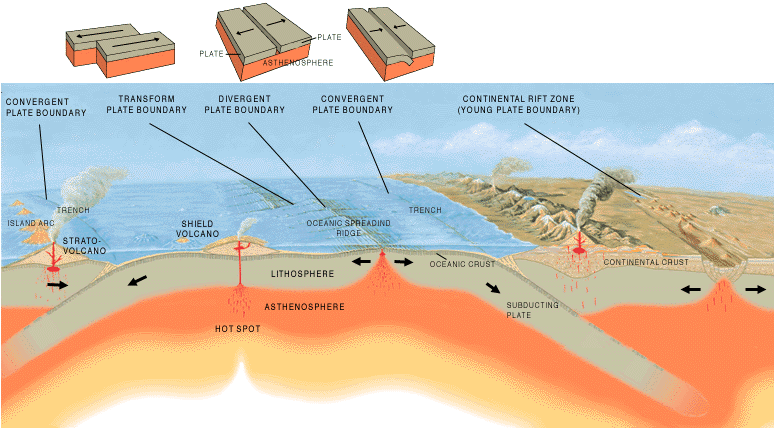
    • I understand now that plate tectonics can push areas of earth that were once underwater up into mountains.
    • And even if you take the flood into consideration I don't think the mountain tops were under water long enough to accumulate sea shells, not to mention the fact that they are folded into the strata and the flood would only have put them into a single layer.
  • Moses wrote the old testament.
    • Had I actually paid much attention when reading the old testament I would have asked how he wrote of his own death.
    • There is no archaeological evidence that he existed. There should be, but there isn't.
    • If he wrote it why did he duplicate his own stories? Was he stupid? Did he forget that God has already told him to write about the origin of the Earth? If he had the ten commandments in hand why did he mix them up and change them in two different sections of the bible?
  • Nobody ever found it necessary to tell me that the New Testament was NOT written directly by the apostles, but were written at least 35 years after Christ's supposed death. This was actually the first thing I ever learned that started me down the path of doubt.
    • I learned when I was 12 that the original text was written in Greek. But I didn't ask the important question "If Jesus was a Jew, and lived in the mid-east, then why were his stories written in Greek?" I'm sure many people learned a few years ago that he spoke the language Aramaic when they saw The Passion, so I wonder if anyone asked that question then?
    • And if you are willing to believe that nobody around him thought it important to document God's adventures on Earth and only passed the information down by word of mouth (even though people had been writing for thousands of years before this), anyone who has played the game of telephone knows how stories get warped as they pass from person to person. So, nobody reading these texts today knows how much was real and how much was the result of distortions passed down over time. The same logic applies to the Old Testament which wasn't written down until at about 1000BC (or not, who knows?) but covers a span of time thousands of years prior to its writings.
  • We stay on the Earth because it is spinning really fast and if it stopped spinning we would all fall off.
    • Now, this one is just stupid. I assume that the person who taught me this was very confused about centrifugal force like you see in 2001: A Space Odyssey and gravity. Even at the age of 7, when I was told this, I thought it sounded wrong.
  • We evolved FROM apes.
  • Rainbows are God's reminder that he promised to never again destroy the Earth and its inhabitants by a flood.
    • This one comes straight from the bible. But anyone taking a physics class will learn exactly how rainbows form, what causes double rainbows, etc.
    • And if it were really true that God felt bad and promised not to do that again then why does he continue to either CAUSE or ALLOW disasters like the tsunami we had a few years ago and the recent earthquakes in China. The tsunami was a flood that killed over 100,000 and the quakes in China are causing lakes to flood and threaten to kill more people than the 60,000+ that the earthquake killed. If he caused these floods then he broke his promise and if he willingly allowed them to happen then he's no better than a pacifist allowing innocent people to die at the hands of murderers.

As a final note I want you to think about what things you find easy to believe and what things just don't make sense to you. I find it interesting that for something that is supposed to be the ULTIMATE truth inspired by God that people don't just GET IT when they read it. No, it takes being FORCED to go to church as a child in order for it to stick for any length of time. If these religions taught the ultimate truth I think our brains would get it without needing explanation and we wouldn't have needed governments to force us to believe or our parents to pass the misinformation down to us. We would just get it and there would be no ambiguity about it. To me, that is how truth works.

EDIT: As if by divine providence I was directed to this video that describes the creation of the heavens and the Earth. A bit tongue-in-cheek but I have to agree: